The Tide Table and the Text Message: Getting Flood-Ready in Thanet Without Losing Sleep
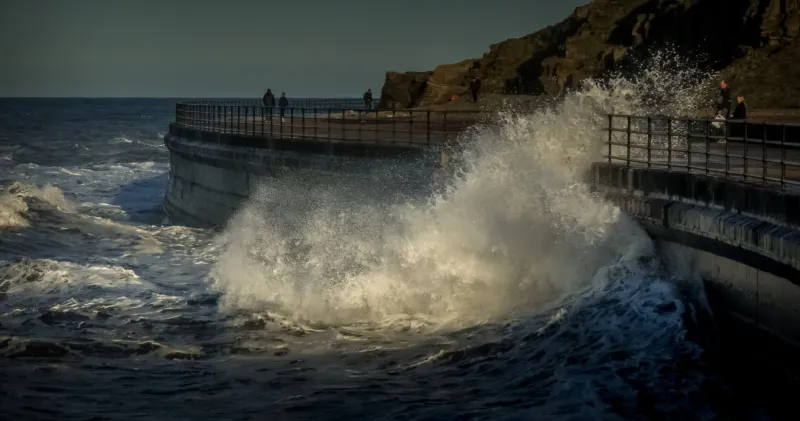
There's a particular kind of Thanet winter evening where the wind comes in off the sea, the bins go over, and somebody in the pub says "they reckon it'll be over the wall tonight." Half the time nothing happens. The other half, you wake up to water on the prom and a friend tagging you in a photo of Ramsgate harbour doing its dramatic thing.
The gap between those two outcomes isn't luck. It's about ten minutes of admin and a bit of knowing where to look. So here's the plain-English version — no drama, no armageddon, just what actually helps when the sea or the sky sends a warning.
An alert, a warning and a "severe" — three different things
The Environment Agency uses a three-step ladder, and knowing which rung you're on stops a lot of unnecessary panic.
- Flood Alert — flooding is possible. Prepare. Move a few things, keep an eye on the forecast.
- Flood Warning — flooding is expected. Act now. This is the one where you shift valuables and think about where the car's parked.
- Severe Flood Warning — flooding poses a danger to life. This is genuinely serious and it's when you follow instructions rather than improvising.
Most Thanet flood events never get past rung one or two. Broadstairs, Ramsgate, Margate, Westbrook and Palm Bay all have low-lying spots that can take on water quickly, and the villages behind the coast — Minster, Monkton, Sarre, Chislet way — have their own history with surface water backing up across fields. Different causes, same message: it's better to know early.
Signing up is genuinely a four-minute job
The Environment Agency's free flood warning service is the single most useful thing on this list. You enter your postcode, choose how you'd like to be reached — text, call, email — and you're done. You can register a business address and a relative's address too, which is quietly brilliant if you've got a parent in a bungalow in Birchington who doesn't do smartphones.
If you'd rather speak to a human, the Environment Agency's Floodline is on 0345 988 1188, and they'll happily talk you through it.
One honest caveat: this service covers river and tidal flooding. Surface water — the kind where a downpour overwhelms the drains and a road turns into a shallow river — is a different beast, looked after by Kent County Council as the lead local flood authority, with Thanet District Council and Southern Water handling their own bits. Nobody is going to text you about a puddle. That one you spot yourself, or hear about from a neighbour.
What the council can and can't do about sandbags
This is where expectations and reality usually part company, so let's be straight.
Councils in England have no legal duty to hand out sandbags. Thanet District Council does keep some stock for genuinely urgent situations, but its own guidance is that residents and businesses are responsible for protecting their own property — and that stock gets stretched fast when a whole seafront wants bags at once. The realistic plan is: have a small supply or a plan for getting one, before you need it.
Where to get them:
- Most builders' merchants and larger DIY shops in the area stock empty sandbags and bags of sand or grit through the winter.
- Some parish councils and community groups keep a small cache — worth asking early, not on the night.
- Bags filled with soil from the garden work fine in an emergency. So do filled compost bags, or a pillowcase of sand. The trick is the plastic sheet underneath: a sheet of heavy-duty polythene tucked under the door and weighted with bags redirects far more water than a wobbly stack of bags alone.
And one small plea: the grit bins on the highway are for icy roads. Emptying them into your porch in October means somebody's nan goes over on the pavement in January.
The grab bag that actually gets used
Most 'flood kit' lists read like a camping expedition. In reality you want the things you'd be furious to have left behind:
- Phone charger and a charged power bank
- A torch that works, plus spare batteries (check them now, not then)
- Any prescription medicines, plus a written list of what you take
- Insurance documents, passport, and a few key papers in a sealed freezer bag or a waterproof folder
- Wellies or sturdy boots, and gloves
- Bottled water, a couple of days of pet food, and something to eat that doesn't need cooking
- A written list of phone numbers — because when the power's off, a paper list beats a dead phone
Keep it in one place, and tell the household where that place is. A box in the understairs cupboard that everyone knows about is worth ten checklists on the internet.
The hour you'll be very glad you spent
Before any warning arrives, on a completely ordinary dry afternoon:
Photograph every room. Skirting boards, the back of the kitchen units, the state of the front door. Insurers ask for proof and nobody has it.
Find your stopcock and your fuse box and make sure you know how to turn them off. If water is coming in near electrics, get the power off — but only if you can do it without standing in water.
Move what matters upwards. Photos, documents, the good coat, anything sentimental and small. If you've got a garage or a low front room, get the irreplaceable stuff out of it well ahead of time.
Check your buildings and contents insurance covers flood, and note the claims number somewhere offline.
Decide, in advance, where you'd go if you had to leave for a night. A relative's sofa in Minster. A friend up the hill. Knowing the answer removes the worst bit of the decision.
During: the boring rules that save lives
- Don't drive through floodwater. Thirty centimetres of moving water can float a car, and you cannot see what the road surface has done underneath.
- Stay off the sea walls and promenades during a tidal warning. Storm-watching photographs are not worth it, and the waves that come over the railings are the ones nobody films because they're too busy running.
- Fifteen centimetres of fast-moving water will knock an adult off their feet. Turn around. It's that simple.
- Call 999 if there's a risk to life — someone trapped, someone in the water. For everything else, 101 or the council.
After: the part nobody warns you about
Flood water is dirty water. Assume it's contaminated, wear gloves, wash your hands properly, and keep children and pets out of it.
Don't start clearing up until you've photographed everything for the insurance claim — and don't bin damaged items until your insurer says you can. Thanet District Council can help with bulky waste collections for genuinely flood-damaged goods; ask rather than dump it on the pavement.
And be gentle with yourself. The week after a flood is exhausting and oddly lonely once the neighbours' wellies go home. Kent's mental health support lines, local churches, food shares and community groups are there for exactly this, and using them isn't an overreaction.
The neighbour bit — the cheapest flood defence there is
Knock on the door of anyone on your street who's older, lives alone, or has a disability. Ask one question: "If it kicks off tonight, do you want me to bang on your door?" Take their number. Give them yours.
That's it. That's the whole scheme. It costs nothing, it takes ninety seconds, and it is more effective than any sandbag in the country.
Numbers worth sticking on the fridge
- Environment Agency Floodline — 0345 988 1188
- Emergency, risk to life — 999
- Power cuts — 105 (UK Power Networks)
- Gas emergency — 0800 111 999
- Southern Water — 0330 303 0368
- NHS non-emergency — 111
- Thanet District Council and Kent County Council — check their websites for current out-of-hours numbers
Numbers and procedures do change, so give them a quick check before the next storm rather than during one. And if you only do one thing after reading this — sign up for the alerts. The text message is the whole game.