Seven Free Things in Thanet Nobody Tells You About (Until You Need Them)
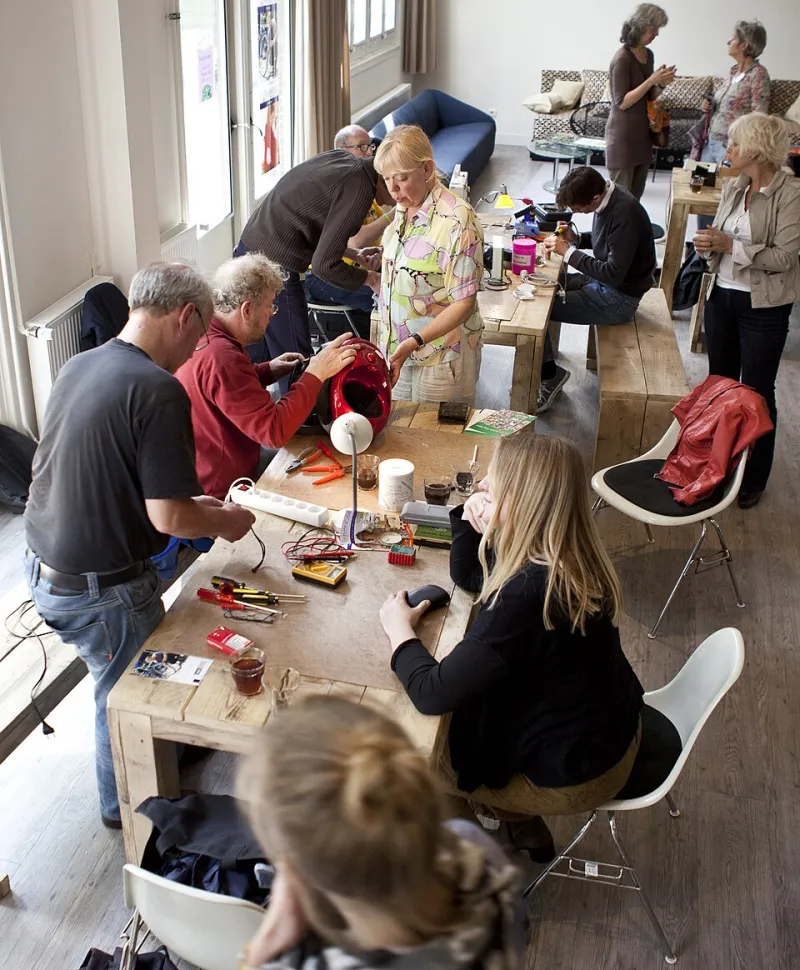
Photo: Ilvy Njiokiktjien, CC BY-SA 3.0, via Wikimedia Commons
Ask someone to name local help and they'll say 'food bank' and stop there. Nothing wrong with food banks — they do vital work and they're busier than they'd like to be. But Thanet's support network is much wider and stranger and more inventive than that single word suggests. There are sheds full of tools you can borrow, fridges full of food that would otherwise be binned, and volunteers who will sit with you for an hour while you try to remember your email password.
The trouble is, most of it spreads by word of mouth, which means the people who'd benefit most are often the last to hear. So consider this your word of mouth.
1. Community fridges: food that needs eating, not a means test
A community fridge is exactly what it sounds like — a shared cold store where local shops, cafés and gardeners drop surplus food, and anyone can take some. The key detail is that there's usually no referral, no form, no proof of anything. You turn up, you take what's there, you leave.
Stock is gloriously random: yesterday's bakery loaves, slightly bruised peppers, a crate of yoghurts nearing their date. Some operate out of church porches, some out of community centres, some from the back of a café. Opening hours tend to be short and possibly a bit chaotic, so check before travelling and bring a bag.
The unspoken etiquette: take what you'll actually use, and if you've grown too many courgettes, drop them in. It's a swap, not a charity.
2. Repair cafés: bring your broken thing and a biscuit
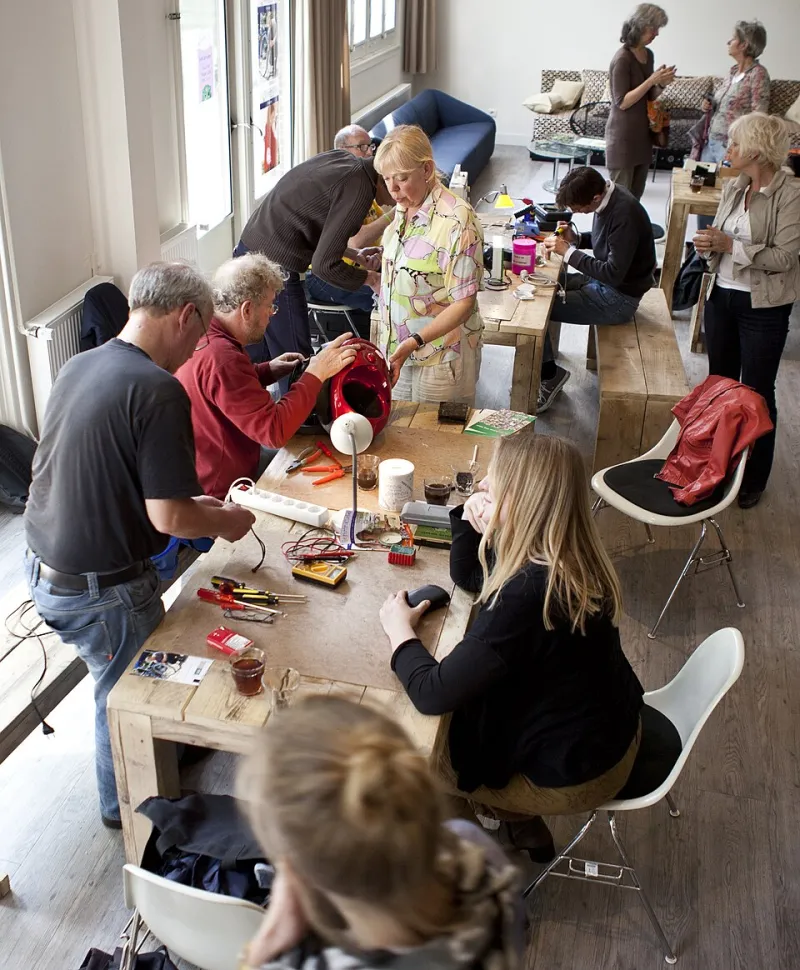
There's something quietly radical about a room full of people fixing toasters. Repair cafés are volunteer-run sessions where you bring a broken item — a lamp, a kettle, a bike, a wobbly chair, sometimes clothing — and someone with a toolkit and forty years of experience has a go at it. Free, though a donation is welcome.
What to expect: a queue, a lot of chat, and roughly a 60–70% success rate. What not to expect: a guarantee, or someone to fix a smartphone screen.
This one is genuinely useful in a cost-of-living sense. A repaired kettle is a kettle you don't buy. It's also a decent way to learn enough to do it yourself next time.
3. Digital inclusion hubs: help with the things that have gone online-only
Here's the quiet crisis nobody marches about: more and more essential services assume you have a smartphone, an email address and the confidence to use both. Council forms, GP appointments, energy accounts, bus passes, job applications — all online, increasingly all demanding two-factor authentication.
Digital help sessions run out of libraries and community centres across Thanet, staffed by volunteers who are patient and unfazed by repeat questions. They'll help you set up an email, sort out a password, use a council portal, or understand why your phone keeps asking for an update. Bring the device, bring any letters with logins on them, and don't apologise for not knowing.
Libraries also lend computers and offer free wi-fi, which matters if your home broadband has been cut off.
4. Mental health drop-ins: no referral, no waiting list
NHS waiting lists are what they are. In the meantime, there are drop-in sessions and peer support groups across the island where you can turn up, sit in a circle or not, and talk to people who've been there. Some are general, some are for specific groups — new parents, men, young people, carers.
They are not therapy and they don't pretend to be. But for a lot of people, a Tuesday evening in a church hall with a brew and five strangers is the difference between a bad week and a crisis. Details are usually on community noticeboards, library boards and local Facebook groups rather than anywhere official.
5. Baby banks and children's swap schemes
Nappies, wipes, formula, Moses baskets, school shoes that were worn twice. Baby banks operate across Kent and distribute through referral from health visitors, midwives and children's centres — so if you're struggling, the fastest route is usually to mention it to your health visitor rather than hunt for a phone number.
Alongside them are informal swap schemes: clothing exchanges at children's centres, uniform rails outside schools, toy swaps in church halls. These are low-friction and lightly publicised. Ask at the school office; they always know.
6. Tool libraries and 'libraries of things'
Why buy a wallpaper steamer you'll use once? Some community groups lend out drills, ladders, sewing machines, cake tins, gardening tools and camping kit for a small annual fee or a deposit. It's an odd concept until you need it, and then it's a revelation.
Availability varies wildly and provision in Thanet is patchier than in bigger cities, so ask around — community centres, men's sheds and allotment associations are good places to start. If nothing exists locally, that's a gap someone could fill.
7. Free advice on money, benefits and rights
Underrated, underused and free. Independent advice services will check whether you're entitled to benefits you're not claiming, help you challenge a decision, deal with debt, or fight a rogue landlord. Sessions run in libraries and community venues, and some offer home visits for people who can't get out.
Bring everything: letters, tenancy agreement, bank statements, ID. The more they can see, the more they can do. And go early — advice services are busiest in January when everything has already gone wrong.
How to pass it on without being preachy
Knowing about these things is only half of it. The other half is telling people in a way that doesn't make them feel inspected.
- Be specific. 'There's a fridge at the church on Wednesday, I'm going, want to come?' lands far better than 'you should look into local help'.
- Normalise it. Mention that you've used it, or that a friend does. Shame is the main barrier, not distance.
- Use the places people already go. Chip shops, launderettes, school gates, bus stops, the barber's. A laminated note on a noticeboard still works in 2026.
- Don't assume. Someone might need the repair café because they're skint, or because they like fixing things. Let them decide why they're there.
None of this is a substitute for decent pay, warm housing or a functioning NHS. But it's what exists right now, run by people who'd rather you turned up than struggled quietly. If you know of a resource we've missed, tell us — the more it's said out loud, the less it needs to be a secret.