Bring a Broken Lamp, Leave With a Mate: The Thanet Sheds and Craft Tables You Can Just Walk Into
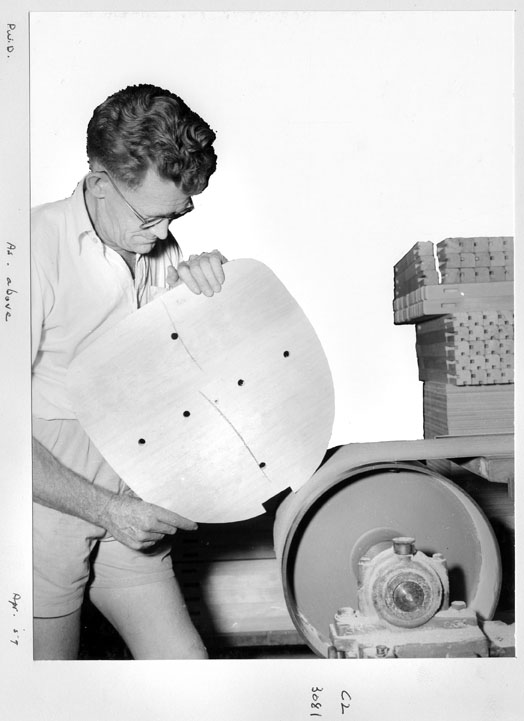
Photo: Lands Department, Survey Office, Cartographic Branch, Photographic Section, Public domain, via Wikimedia Commons
There's a particular kind of loneliness that doesn't look like loneliness. It looks like a bloke in a tidy garage, perfectly happy, who hasn't had a proper conversation with anyone but the postman since Tuesday week. It looks like someone who moved to Thanet for the sea air and the cheaper rent, and then discovered that sea air is nicer with company.
If that's ringing a bell, this piece is for you. Not a lecture, not a wellbeing campaign — just a plain description of the sort of places in Thanet where you can turn up, do something with your hands, and let conversation happen or not happen, depending on the day.
The 'shed' thing isn't really about sheds
Men's Sheds started in Australia in the 1990s, when someone noticed that retired men were quietly disappearing from community life after the last day of work. The fix was almost embarrassingly simple: give them a workshop, a kettle and no agenda.
The idea crossed to the UK, and there's now a national association with a map of groups. Some meet in actual sheds. Plenty meet in church halls, scout huts, allotment buildings and the back rooms of community centres — the sort of spaces that smell faintly of sawdust and TCP and are all the better for it.
What happens inside varies. Woodwork, bike repairs, small electrical fixes, model-making, restoring furniture nobody else wanted. What doesn't vary is the rule that nobody is in charge of your social life. You are not asked to introduce yourself to fourteen strangers. You are asked whether you want a brew and whether you'd rather sand that or hold it.
It's not just sheds, and it's not just men
The name is unhelpful. Sheds across Kent are increasingly mixed, and there's a growing number of women's sheds too. If woodwork isn't your thing, the same principle runs through Thanet's craft circles, knitting and crochet groups, patchwork sessions and mending tables — most of which meet in libraries, village halls and church rooms from Birchington down to Ramsgate.
Sewing circles deserve a special mention. They tend to be the least intimidating groups going: everyone's looking down at their own hands, the chat wanders, and nobody's assessing you. If you've ever wanted to learn to hem a pair of trousers rather than pay someone a tenner, this is the cheapest route in.
The repair café corner
Over the last few years, repair cafés have quietly spread across the country — volunteer-run sessions where you bring a broken toaster, a lamp with a dodgy flex, a bike with a skipping chain, and someone helps you fix it. Sometimes for free, sometimes for a donation toward the tea fund.
The real value isn't the toaster. It's that you spend forty minutes next to a stranger, both of you squinting at a small screw, and by the end you know their name and where they walk their dog. That's how friendship actually starts, whatever the leaflets say about 'social prescribing'.
What to bring (the honest answer)
Nothing. Truly. If you turn up to a shed with nothing but yourself, someone will hand you a rag or a mug and you're in. That said, it does help to bring:
- Something broken, even something small. It gives you a reason to be there and a job to do.
- A couple of pounds for the tea kitty. Most groups run on donations and none of them will ask twice.
- A phone number written on paper, in case the session overruns and someone offers you a lift home.
- Patience for the first twenty minutes, which are always the strangest. That feeling passes around the time the second cup goes round.
What you don't need is a referral, a diagnosis, a membership fee or a reason. Nobody will ask why you're there. Half the people there couldn't tell you why they first walked in either.
The bit where you don't have to talk
This matters, so it's getting its own heading. Some weeks you will not want to chat. That is completely fine and it's built into the format by accident. If you are sanding a shelf, the shelf is the conversation. If you are unpicking a hem, the hem is the conversation.
Groups like this tend to run on what one shed organiser calls 'shoulder-to-shoulder time' — the sort of company you get in a car or on a fishing bank, where you're both looking at the same thing rather than at each other. For a lot of people, especially anyone who finds eye contact exhausting, that's the only sort of company that really works.
Finding one near you
Start with the obvious: search for the UK Men's Sheds Association's group map, and search 'repair café Kent' for the nearest mending session. Beyond that, the best sources of local knowledge are usually the least glamorous:
- Your local library. Margate, Ramsgate and Broadstairs libraries all carry noticeboards and staff who know what's on. Ask at the desk — they get asked this constantly.
- The parish or town council. Minster, Westgate, Birchington — small councils often keep a list of what meets in the village hall and when.
- The nearest church hall or community centre. Even if you never go inside on a Sunday, the noticeboard in the porch is a goldmine.
- Ask a neighbour. Genuinely. Someone on your street is already going to something and would be delighted to have company on the walk.
If you're nervous, do this
Ring ahead. Not to book — just to say you're thinking of coming along and asking what time's best to arrive. Every group worth its salt will give you a straight answer and probably tell you which door to use, which saves you the indignity of trying three wrong ones.
Go for the first hour only. Leave when you like. Nobody keeps a register. If it's not for you, you've lost an afternoon and gained a repaired lamp — and you can try a different one next week. Thanet's small enough that there's usually another option within a bus ride.
And if you're reading this on behalf of someone else — a dad, a neighbour, a mate who's gone quiet since retiring — the kindest thing you can do is offer to go with them the first time. Not drive them and collect them. Go in. Sit down. Have a cup of tea. The second visit is always easier than the first.