Beyond the Prescription Pad: What Social Prescribing Really Looks Like in Thanet

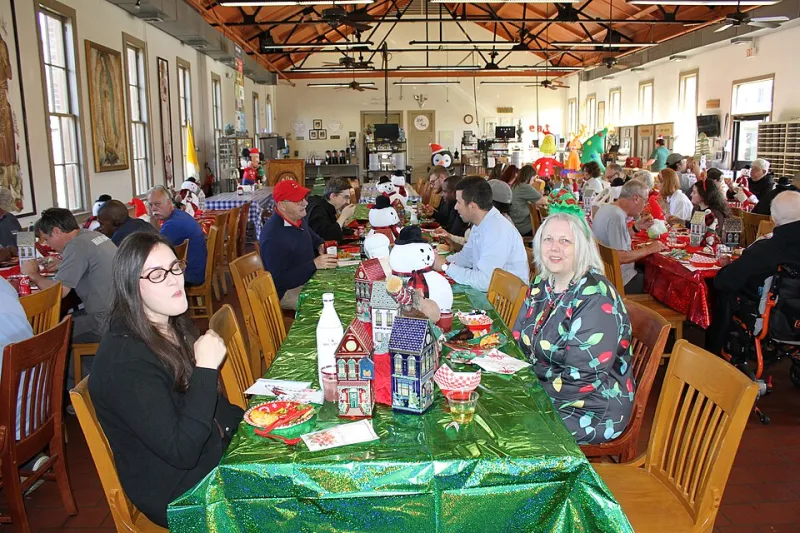
Photo: AJ12119, CC BY-SA 4.0, via Wikimedia Commons
You book the appointment about your knee. Or your sleep. Or the fact that you've been knackered since about March and can't put your finger on why. You come out with a phone number for a walking group and the name of a woman called something like Sue.
That moment — standing in the car park, holding a scrap of paper and wondering whether the doctor has actually listened — is where a lot of people quietly give up on social prescribing. Which is a shame, because it's one of the more useful things the NHS has bolted on in the last decade, and most of us have never had it explained properly.
So here's the plain version.
The short answer
Social prescribing is a way for a GP, nurse or other health professional to point you towards non-medical help in your own area — groups, walks, hobby sessions, volunteering, advice services, befriending schemes. Instead of (or as well as) a prescription, you get a conversation with someone whose entire job is knowing what's on near you.
That person is usually called a link worker, sometimes a community connector or social prescribing co-ordinator. Different surgeries use different titles. The role is broadly the same.
Who it's actually for
The name makes it sound like it's for one very specific sort of person. It isn't. In practice, people get referred for all sorts:
- Long-term conditions that are wearing them down
- Low mood, anxiety or a general flatness that isn't quite a diagnosis
- Life after a hospital stay, when the house is quiet and the routine has gone
- Bereavement, or the first year after a big change
- Caring for someone and slowly running out of steam
- Retirement, redundancy, or moving to Thanet and knowing absolutely nobody
- Money worries that are making everything else harder
You'll notice loneliness is on that list, but it's rarely the whole story. Most people turn up with two or three things tangled together. That's normal, and it's fine.
What a link worker does — and doesn't do
A first appointment is usually a proper conversation, somewhere between half an hour and an hour, in a room that isn't a waiting room. They'll ask what a decent week might look like, what you've tried before, what you'd never try again, and what's realistically within reach on a Tuesday morning when it's raining.
Then, together, you pick one or two things. Not twelve. One or two.
The genuinely helpful bits that people don't expect:
- They can ring ahead. If you're nervous about turning up cold to a group in Ramsgate or Cliftonville, they can often make the first call for you.
- They sometimes come with you. Not forever. Just the first time, if that's what it takes.
- They check back in. A few weeks later, someone asks how it went. That follow-up is the bit that makes it more than a leaflet.
- They know the transport reality. A group that's twenty minutes away on paper can be ninety minutes and two buses in practice. A good link worker plans around that, and may know about community transport, bus passes or lifts.
What they don't do: diagnose, prescribe, or judge. They're not a counsellor and they're not a gatekeeper to the real help. They're a local knowledge service with a diary.
What it isn't
Worth saying clearly, because a lot of people turn up expecting something else and leave disappointed.
It isn't therapy. Some of what they point you towards may have a therapeutic effect, but a link worker won't treat your depression.
It isn't a cure, and it isn't a replacement for medical care you actually need. Keep the appointments. Take the tablets if they're working.
It isn't an assessment of your worth. There's no threshold of unwellness you have to clear. You don't have to arrive with a crisis to qualify.
And it isn't a waiting room with leaflets — or at least, it's not supposed to be. If yours feels like that, say so, because that's useful feedback and services do get nudged by it.
The Thanet bit
Social prescribing works best in a place small enough to know itself, and Thanet is that sort of place. The stuff people get pointed towards is rarely glamorous: a hall in Birchington, a library session in Margate, a chair-based exercise class in Broadstairs, a men's shed, a gardening plot, a singing group that meets on a Thursday, a volunteer rota at a charity shop.
There are also the ones you'd never find on your own. A photography walk along the Viking Coastal Trail. A knit-and-natter that's really a support group with wool. A lunch club in Westgate where the point is the table, not the soup.
Groups come and go, days shift, and one hall closing sends ripples across half the patch — which is exactly why a link worker exists rather than a leaflet rack.
How to actually get in
You don't need a special form or a particular diagnosis. The most common route is simply mentioning it to your GP, practice nurse or the person doing your health check. Something like: is there a link worker here I could speak to?
Reception staff can usually book it, and you're allowed to ask directly at the desk — that's much less awkward than it feels.
Other doors in, depending on the surgery and the service:
- Hospital discharge teams, when you're going home after a stay
- Community pharmacists, who hear a lot
- Housing officers and support workers
- Carer support organisations, if you're the one doing the looking after
- Some areas take self-referrals, so it's worth asking whether that's an option where you are
- Local charities and volunteer centres, who often know the names of the link workers personally
If you're not sure whether you qualify, ask anyway. The worst outcome is being pointed to something else useful.
The honest sentence to say
You don't have to explain yourself properly. In fact, the most efficient thing you can say is the vague version:
I'm not sure what I need, but I'm not doing brilliantly, and someone suggested this.
That's enough. It's a starting sentence, not a test.
If you're nervous about the first session
Go early, sit near the door, leave after twenty minutes if it's awful. Nobody keeps score. Most groups are quietly desperate for new faces and will be far more worried about making you welcome than you are about turning up.
And if the first thing you try is wrong — a bad fit, wrong day, wrong sort of people — that's data, not failure. Go back and say so. The second suggestion is usually a better one.
Social prescribing isn't a miracle. It's one thread pulled loose from a tangle, and sometimes that's what shifts things: a reason to leave the flat on a Wednesday, a face that says hello, a bit of routine that isn't built around an appointment.
No pill, no prescription charge, no side effects. Worth a go.